Trust in Your Environment #7
Trust in your environment means choosing full, honest participation in a structure that interrupts familiar dysfunction, even when it feels uncomfortable.
Trust in your environment does not mean trusting blindly or giving up my judgment. It means recognizing that I came into recovery because my old environment, old thinking, and old instincts were not producing freedom. If those had been working, I would not have needed a different structure. Remembering that helps me understand why this environment exists at all: it is here to interrupt what was slowly destroying me, not to confirm what I already know.
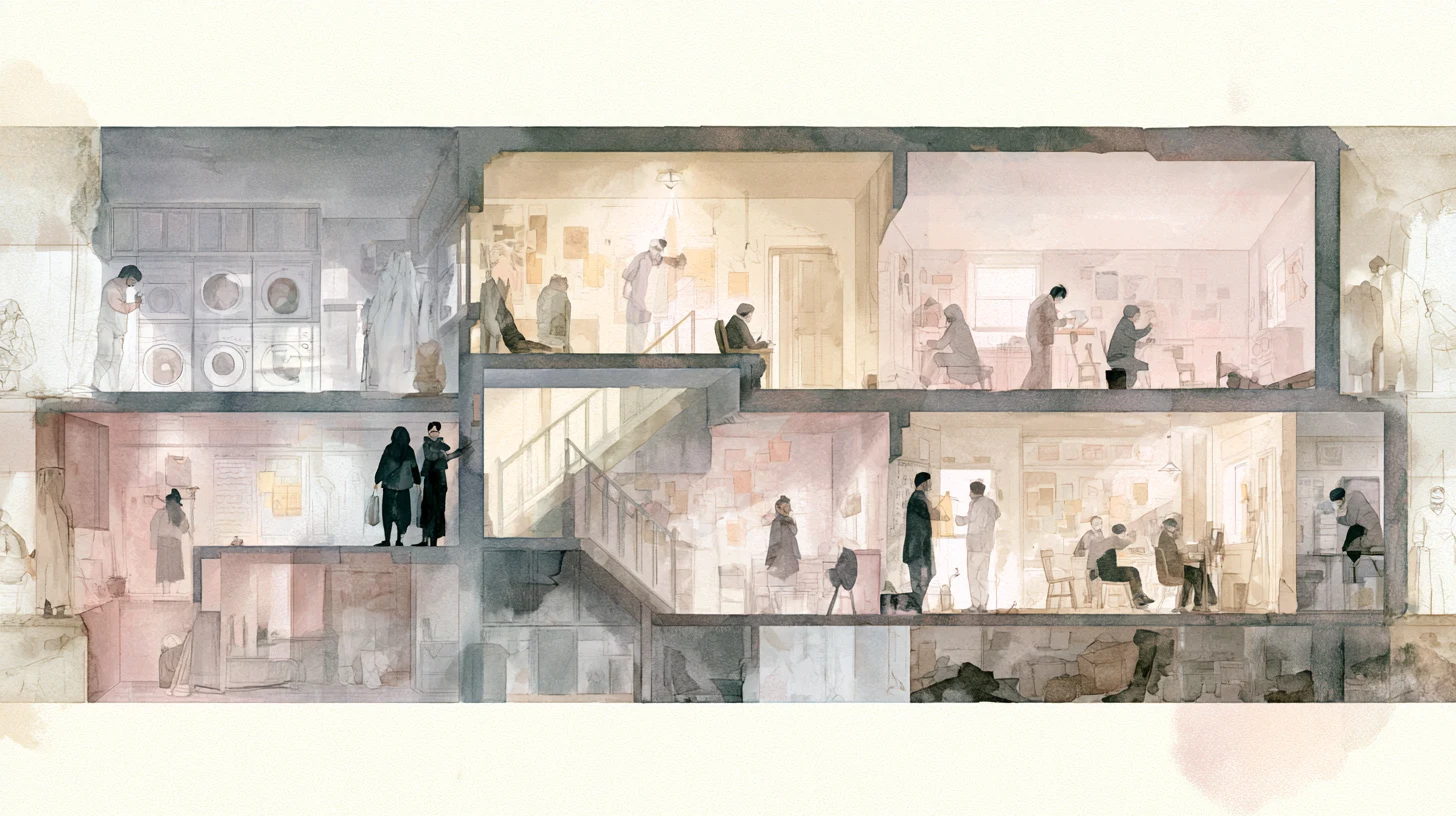
The environment is not just the building. It is the structure, the schedule, the staff, the groups, the community, the expectations, and the corrections. It is everything around me that interrupts what used to feel normal. When I walk into a group, follow a schedule, or respond to a staff direction, I am not just moving through a space. I am moving through a set of boundaries and expectations that are different from the ones I used to live by. Those differences are the point. They are what give this environment the potential to shape me in a new direction.
That matters because growth often feels uncomfortable before it feels safe. The environment may slow me down when I want to rush, confront me when I want to hide, redirect me when I want to defend myself, or ask me to participate when I want to withdraw. In those moments, my first instinct is often to see the environment as an obstacle or an enemy. If I treat every discomfort as proof that the environment is against me, I may reject the very structure that is trying to help me change. I can end up defending my old patterns in the name of “protecting myself,” when what I am really protecting is my familiar dysfunction.
Trust in your environment, for me, means learning to pause inside that discomfort instead of immediately pushing back. It means asking whether the friction I feel is actually a sign that something healthy is interrupting something unhealthy. The environment slowing me down might be protecting me from impulsive choices. The confrontation I do not want might be the mirror I need. The redirection I resent might be steering me away from another round of self-justification. The invitation to participate when I want to withdraw might be the only thing standing between me and another isolated spiral.
The recovery mechanism is participation. The environment cannot shape me if I only live around it. I have to enter it honestly. I can sit in the building, follow the bare minimum of rules, and still keep my real thoughts, fears, and motives hidden. When I do that, I am technically “in” the environment but not actually using it. Participation means letting the structure touch my real behavior and my real beliefs, not just my schedule. It means answering questions honestly, showing up fully to the work in front of me, and allowing feedback to land instead of treating it as background noise.
In the past, I sometimes wanted the environment to protect me without letting it challenge me. I wanted the safety without the exposure, the support without the accountability, the comfort without the discomfort of change. That is a contradiction. Protection without challenge would have left my core patterns untouched. I can see how easy it is to ask the environment to shield me from consequences while resisting any demand that I change the behavior that creates those consequences. Trust in your environment pushes against that. It asks me to accept that real safety in recovery includes being challenged, corrected, and sometimes called out.
This connects directly to pride and quality because trusting the environment means respecting the work it gives me, even when the work seems small. Pride tells me I am above certain tasks, certain corrections, or certain pieces of feedback. Pride wants to decide which parts of the environment are “worth” my full effort and which parts I can treat as optional. Quality, on the other hand, shows up in how I do the next right thing that is actually in front of me, not just the things I find impressive or meaningful. When I trust the environment, I treat the assigned work, the structure, and the feedback as intentional, not random. I bring quality to it instead of performing effort only when it suits my ego.
It also connects to flagging because I cannot claim to trust the process while giving it half my attention. When I flag—when I check out mentally, cut corners, or drift through the day on autopilot—I am essentially saying that the environment does not really matter. I am present in body but absent in participation. Trust in your environment shows up in where my attention goes: whether I actually listen in groups, whether I take notes seriously, whether I follow through on what I am asked to do, and whether I stay engaged when I feel bored, resistant, or exposed. Half-attention is a quiet way of rejecting the environment while pretending to comply with it.
Trust in your environment, then, is not a feeling I wait for. It is a decision to participate fully in a structure I chose because my old way was not working. It is a willingness to let discomfort be information instead of automatic proof that something is wrong. It is a commitment to bring quality to the work in front of me and to notice when pride or flagging start to pull me away from that. I do not have to agree with every detail or like every moment, but if I am here, I can either fight the environment or let it do the job I came here for.