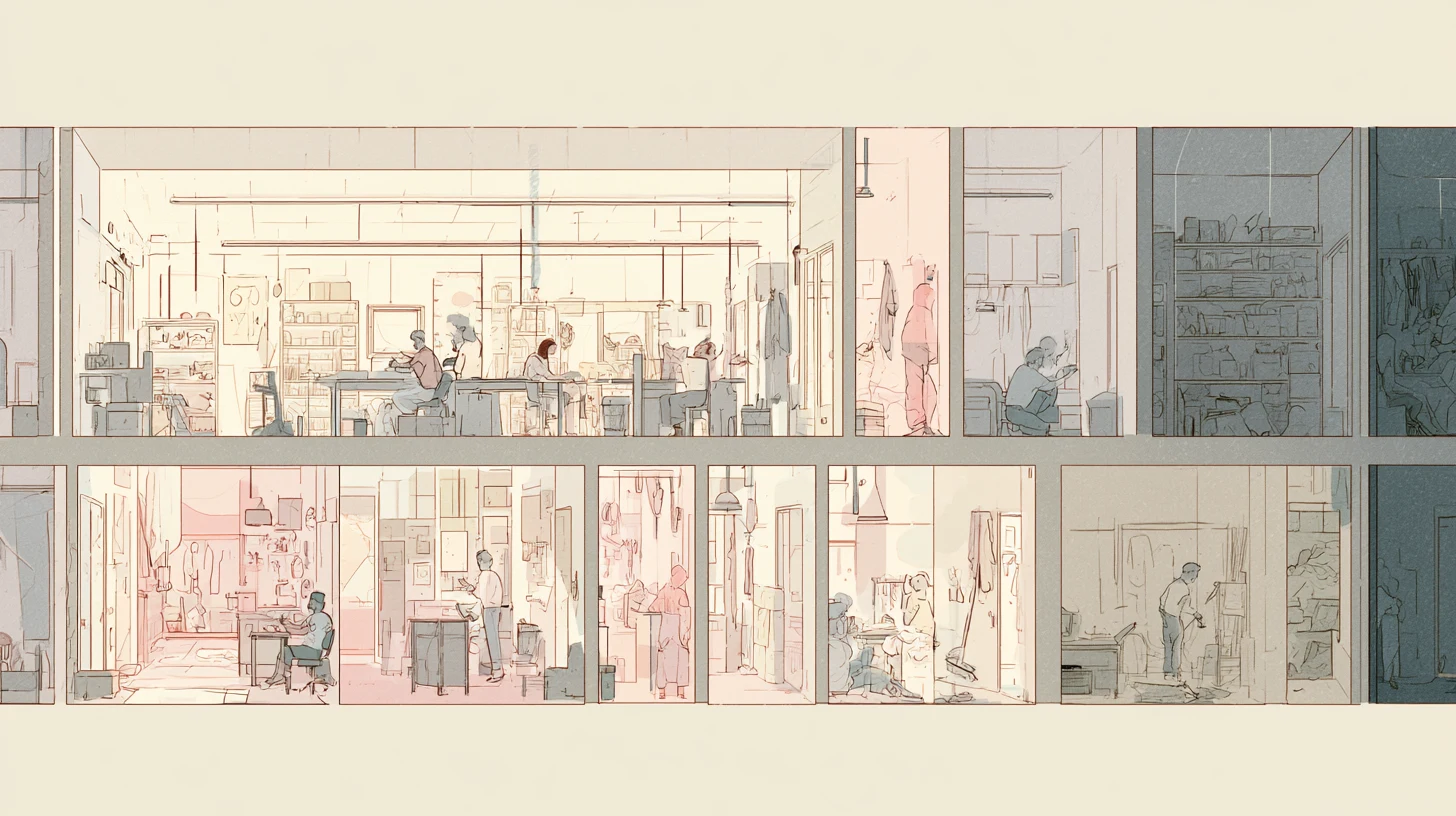
People, Places, and Things #7
Recognizing that people, places, and things quietly shape who feels available inside me forces me to treat my environment as active recovery structure, not neutral background.
People, places, and things is not just a warning about obvious triggers. It is about understanding how environments shape behavior before I even realize I am being shaped, how the surroundings I treat as background can quietly become active participants in my choices.
People, places, and things are not neutral.
Certain people can pull me back into old roles. I can feel myself starting to relate the way I used to, talk the way I used to, or minimize the way I used to, almost before I have consciously decided to do it. Certain places can wake up old associations, so that just being there starts to color how I think and what feels possible. Certain things can carry memories, fantasies, cravings, resentments, or identities that I thought I had left behind but suddenly feel close again.
Sometimes the danger is not that something forces me to relapse or act out. The danger is that it slowly makes an old version of me feel available again. It makes that version feel nearby, reachable, and less extreme. The more available that old self feels, the easier it becomes to justify small steps in that direction, and the less shocking it feels to imagine going all the way back.
That is what makes this concept serious.
A person, place, or thing may not look dangerous from the outside. It may look familiar. Comfortable. Nostalgic. Exciting. Harmless. It may even look like something I “should” be able to handle. But recovery is teaching me that familiarity is not the same as safety. Something can feel like home and still be a place where my disease thrives. Something can feel like freedom and still be a structure that quietly removes my protections.
Some environments do not attack recovery directly. They simply make the old life feel normal again. They make the old stories, the old habits, and the old reactions feel reasonable instead of risky. When that happens, I can start to lose the contrast between recovery and acting out. The line between the two blurs, and I stop noticing how far I am drifting.
In the past, I think I sometimes overestimated my ability to remain unchanged by what I surrounded myself with. I wanted to believe I could go anywhere, talk to anyone, expose myself to anything, and still stay exactly the same internally. That belief let me treat my environment as a test of strength instead of a real influence. It kept me from admitting that I am impressionable, that I absorb tone, energy, and expectations even when I tell myself I am just observing.
But recovery is teaching me that influence often works quietly. It does not always announce itself. It enters through attention, memory, desire, resentment, comparison, and emotional permission. It shows up in what I keep looking at, what I keep replaying in my head, what I allow myself to fantasize about, and what I tell myself I “deserve.” Over time, that quiet influence can shift what feels acceptable, what feels possible, and what feels inevitable.
This connects directly to understand rather than be understood because I have to understand what my surroundings do to me before I defend my right to be around them. If I skip that step, I can argue for my freedom while ignoring the cost. I have to become honest about what certain people, places, and things awaken in me—what they invite, what they reinforce, and what they make easier to rationalize. That kind of understanding is uncomfortable, but without it I end up protecting access to environments that are actively undermining me.
It also connects to LACA because leaving treatment against clinical advice often involves a return to the people, places, and things that helped make treatment necessary in the first place. Sometimes the mind says, “I just need freedom,” when the pattern is really asking to be fed again. The language of freedom can cover a desire to go back to what is familiar, even when that familiarity is exactly what keeps me sick. When I see it that way, LACA is not just about leaving a building early; it is about returning myself to an environment that is already preloaded with my old behavior.
So for me, people, places, and things means my recovery is not only about what is inside me. It is also about what I keep placing myself near. It is about the rooms I sit in, the conversations I stay in, the objects I keep close, and the worlds I keep visiting in my mind. Those choices are not background details; they are part of the structure that either supports or erodes my recovery.
Today, I’m trying to respect the fact that my environment can either support the person I am becoming or quietly invite back the person I am recovering from. Respecting that means taking my surroundings seriously, not as proof of weakness, but as an honest acknowledgment that who and what I stay close to will, over time, shape who I am willing to be.