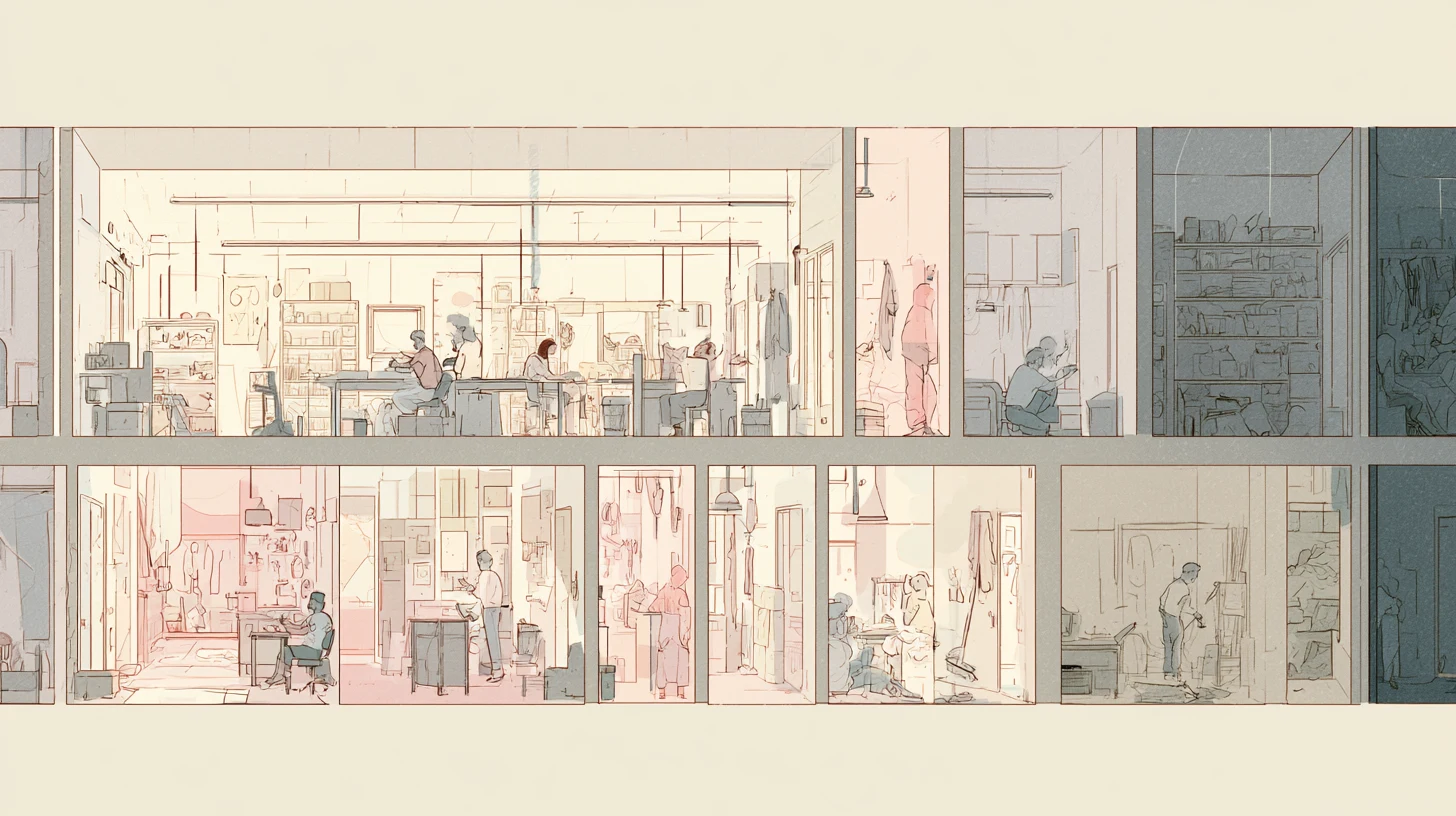
People, Places, and Things #9
People, places, and things are not neutral: they can reactivate old identities or support who I am becoming, so recovery includes choosing environments responsibly.
“People, places, and things” is not just a warning about obvious triggers. It is about understanding how environments shape behavior before I even realize I am being shaped, and how that shaping can begin long before anything dramatic or “relapse-level” happens.
People, places, and things are not neutral.
Certain people can pull me back into old roles. I can feel myself slipping into familiar patterns of humor, secrecy, defensiveness, or performance without consciously choosing it. I may start talking the way I used to, minimizing the way I used to, or chasing the same kind of validation I used to.
Certain places can wake up old associations. A neighborhood, a bar, a bedroom, a parking lot, even a particular route I drive can carry a whole atmosphere with it. My body remembers before my mind catches up. I can feel a shift in posture, in expectation, in what feels “normal” to do there.
Certain things can carry memories, fantasies, cravings, resentments, or identities. A device, an app, a piece of clothing, a playlist, a photo, a saved message, a browser bookmark, a social media account, a hotel loyalty program—these can all act like small doors back into old versions of me. They hold not just memories but invitations.
Sometimes the danger is not that something forces me to relapse or act out. The danger is that it slowly makes an old version of me feel available again. It makes that version feel close, reachable, and emotionally justified. I start to feel like, “That wasn’t so bad,” or, “I could handle it differently this time,” or, “I deserve a little escape.” The environment doesn’t push me over a cliff; it just walks me back to the edge and lets me look down for a while.
That is what makes this concept serious.
A person, place, or thing may not look dangerous from the outside. It may look familiar. Comfortable. Nostalgic. Exciting. Harmless. It might even look socially acceptable or “normal” by other people’s standards. But familiarity is not the same as safety, and social normalcy is not the same as personal safety for me.
Some environments do not attack recovery directly. They simply make the old life feel normal again. They normalize the language, the jokes, the secrecy, the way time is used, the way boundaries are ignored. They make it feel like I am the strange one for wanting something different. Over time, that pressure can wear down my commitment even if nothing obviously “bad” is happening yet.
In the past, I think I sometimes overestimated my ability to remain unchanged by what I surrounded myself with. I wanted to believe I could go anywhere, talk to anyone, expose myself to anything, and still stay exactly the same internally. I treated myself like a fixed object instead of a person who is constantly being influenced. I used “freedom” and “maturity” as arguments to keep myself near things that were quietly eroding me.
Influence often works quietly. It does not always announce itself. It enters through attention, memory, desire, resentment, comparison, and emotional permission. It shows up in what I start to daydream about, what I start to justify, what I start to miss. It shows up in how I talk to myself after I leave a certain person or place, and in what I feel entitled to because of how “hard” something felt.
This connects directly to “understand rather than be understood” because I have to understand what my surroundings do to me before I defend my right to be around them. If I skip that step, I can easily argue for my own access to danger. I have to become honest about what certain people, places, and things awaken in me—what they stir up in terms of fantasy, resentment, entitlement, loneliness, or excitement. I have to notice not just what happens while I am there, but what happens in me after I leave.
It also connects to LACA because leaving treatment against clinical advice often involves a return to the people, places, and things that helped make treatment necessary in the first place. The mind can dress this up as independence, autonomy, or “I know what I’m doing now,” but underneath, the pattern may be asking to be fed again. Sometimes the mind says, “I just need freedom,” when what it really wants is access—to old contacts, old neighborhoods, old devices, old routines that quietly support the behavior I’m supposedly leaving behind.
So for me, people, places, and things means my recovery is not only about what is inside me. It is also about what I keep placing myself near, what I keep allowing into my daily orbit. It is about the rooms I sit in, the conversations I tolerate, the digital spaces I keep active, the objects I refuse to let go of because of what they represent.
I’m trying to respect the fact that my environment can either support the person I am becoming or quietly invite back the person I am recovering from. That respect shows up in small decisions: who I text back, which invitations I decline, which routes I avoid, which accounts I delete, which items I throw away, which rooms I no longer enter alone. Each of those choices is a way of acknowledging that people, places, and things are not neutral, and that my recovery includes taking responsibility for what I stand next to, not just what I say I believe.