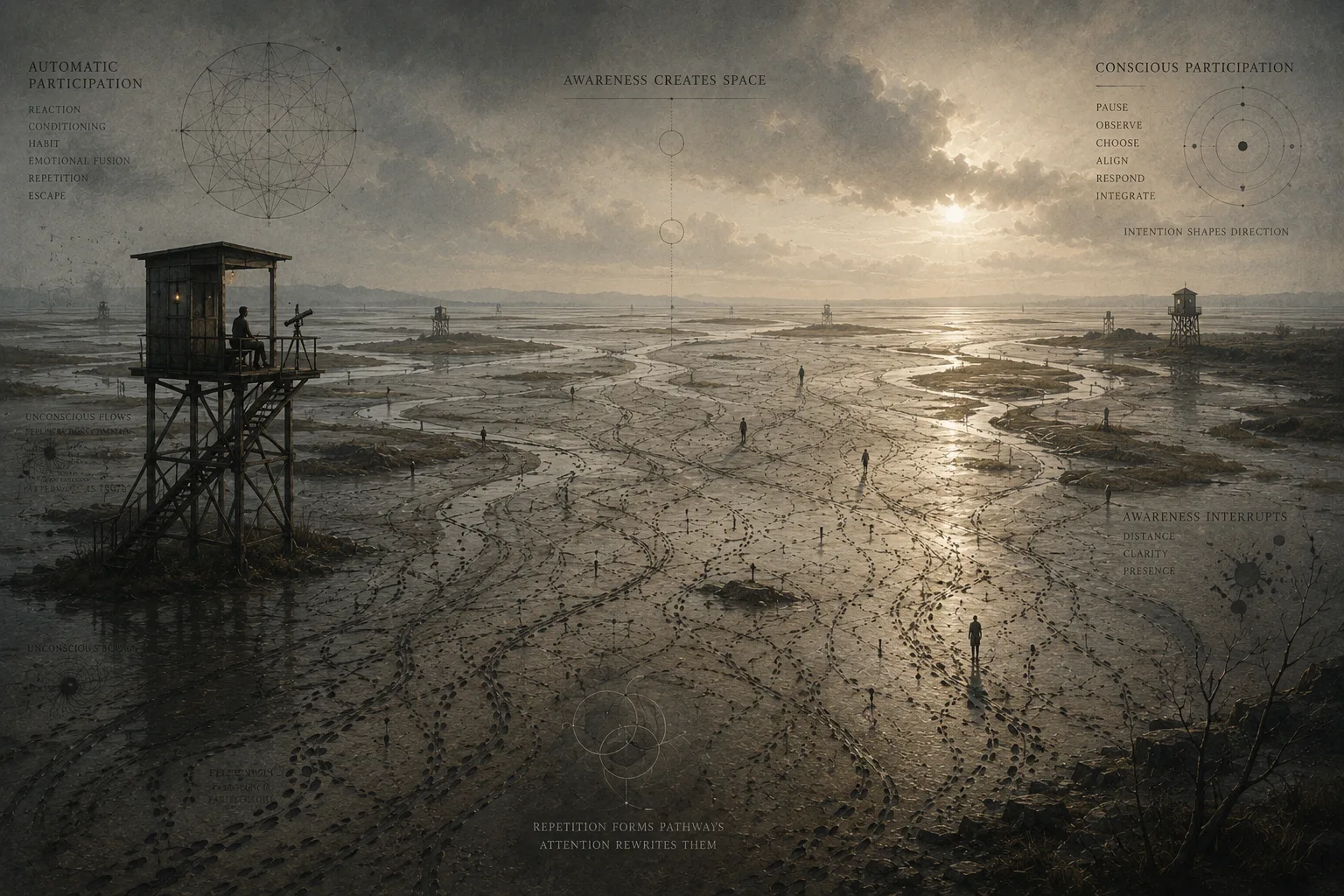
Do Your Thing and Everything Will Follow #9
Returning daily to honest, disciplined participation in your own lane replaces outcome control and image management with grounded responsibility and quiet change over time.
Do your thing and everything will follow does not mean ignore everyone else or act selfishly. It does not mean I get to bulldoze people in the name of “being myself.” For me, it means return to my lane before I start trying to manage the whole world around me. It is a reminder that my life actually moves when I am doing the work that is mine, not when I am trying to rearrange everything and everyone around me.
My thing is my honesty, my participation, my attitude, my discipline, my response, and my willingness to be corrected. Those are the places where I have actual responsibility. Those are the areas where I can show up differently today than I did yesterday. When I abandon those and start trying to control outcomes, people’s opinions, timing, approval, or how things look, I lose contact with the work that is mine to do. I drift into managing impressions, rehearsing conversations, predicting reactions, and trying to secure guarantees. None of that is my lane, and none of it actually moves my life forward.
There is a real difference between caring about people and trying to run their side of the street. When I am in my thing, I can still be considerate, I can still listen, and I can still respond to reality. But the center of gravity is my own honesty and participation. When I slide into controlling, the center of gravity becomes their reaction, their approval, or some imagined future outcome. That shift is usually subtle at first, but it changes everything. I stop asking “What is mine to do?” and start asking “How do I make this come out the way I want?” That is where I start to lose myself.
The daily practice underneath do your thing and everything will follow is focus. Not passive focus, but disciplined focus. It is not just “thinking about recovery” or “having good intentions.” It is choosing, again and again, to bring my attention back to my lane. I ask: what belongs to me today? What is the next right action? What responsibility am I avoiding because I am distracted by something outside my control? Those questions pull me out of fantasy and back into participation.
Sometimes the answer to “what belongs to me today?” is small and unglamorous. It might be telling the truth in a situation where I would rather smooth things over. It might be following through on a commitment I made when I felt more motivated than I do right now. It might be admitting I was wrong instead of defending myself. Those are not dramatic moves, but they are my thing. They are the kind of actions that actually change who I am over time, even if nobody else notices in the moment.
One concrete application is simple: instead of trying to prove I am changing, I do the thing that a changing person would do. That shift matters. When I am trying to prove I am changing, the focus is still on perception. I am watching myself from the outside, wondering how I look, hoping someone will validate the effort. When I do the thing that a changing person would do, the focus is on the action itself. I participate in the behavior, whether or not it is seen, whether or not it earns me reassurance. The proof, if it ever comes, is a byproduct, not the goal.
In the past, I sometimes wanted reassurance before action. I wanted someone to tell me it would work out, or that they believed in me, or that I was already different, before I actually did anything different. That kept me stuck. I was waiting for a feeling of safety or certainty that only shows up after repeated action. Recovery is teaching me that action has to come first. The feeling follows the doing, not the other way around. Do your thing and everything will follow is another way of saying: move your feet in your lane, and let the emotional and relational consequences unfold over time.
This concept also exposes how much time I can spend playing games with perception. When I stop doing my thing and start managing how I look, I am no longer in honest contact with myself or with other people. I might say the right words, present the right image, or perform the right role, but underneath I am not actually participating in the work that belongs to me. Playing games is what happens when I treat appearances as more important than reality. It is a way of avoiding the discomfort of real change by substituting performance.
This connects to a new day because each day gives me another chance to return to my own work. A new day is not just a reset of circumstances; it is a reset of focus. I can wake up and either pick up the old project of controlling outcomes and opinions, or I can pick up my thing: honesty, participation, attitude, discipline, response, and willingness to be corrected. The external situation might not change much from one day to the next, but my decision about which project I am running does. That decision is where my freedom actually lives.
Do your thing and everything will follow does not promise that everything will follow in the way I want, on the timeline I prefer, or with the approval I think I need. It points to a different order: first my lane, then whatever comes. When I stay with my thing, I am at least aligned with my own responsibility, even when outcomes are uncertain. When I abandon my thing to chase outcomes, I lose both: I lose my integrity and I still cannot guarantee how anything turns out.
So this concept is a daily orientation. It asks me, in concrete terms: am I doing my thing right now, or am I trying to run the whole show? Am I willing to let everything follow in its own way and its own time, while I keep returning to the work that is actually mine?