Feelings Are Not Facts #12
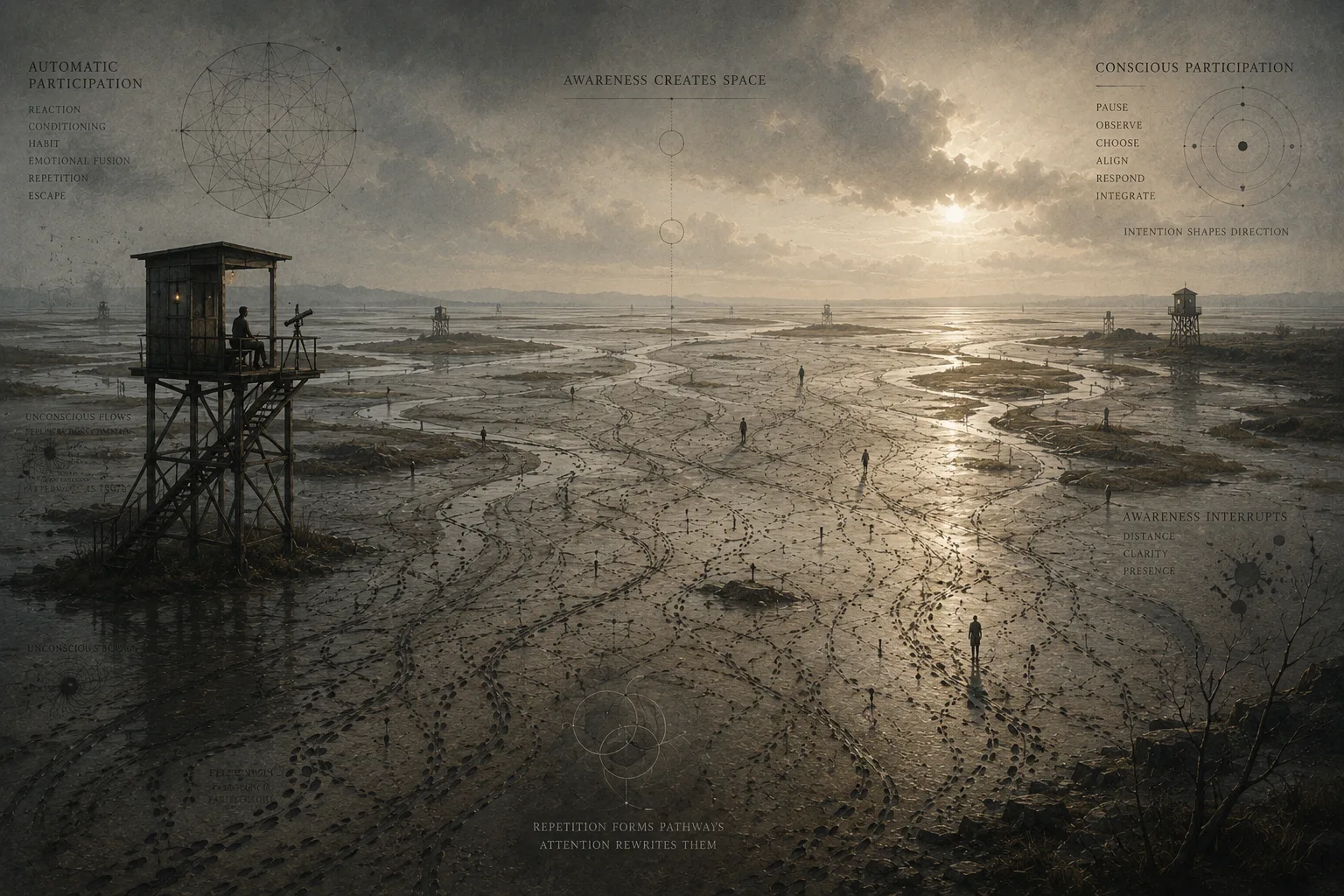
Treating feelings as important but limited signals creates space to question the story they tell, so judgment and action stay grounded in what is actually true.
Feelings are not facts; they are real experiences that tell me something is happening inside me. They matter. They are not fake, imaginary, or something I am supposed to rise above. They can warn me, reveal me, humble me, and guide me toward something I need to examine. They are part of how I register reality, but they are not the whole of reality by themselves.
The problem comes when I confuse “this is what I feel” with “this is what is true.” Feelings are not facts because they are not always accurate witnesses. They are filtered through my history, my fears, my expectations, my shame, and my defenses. A feeling can be real and still misread the situation. It can be telling the truth about my internal state while telling a distorted story about the external world.
Fear can feel like danger when what I am facing is only discomfort. My body can light up as if I am under threat when I am actually just stepping outside my comfort zone or facing something unfamiliar. Shame can feel like truth when what I am actually experiencing is exposure. I can feel like I am fundamentally wrong or defective when what is really happening is that something hidden in me is coming into the light. Anger can feel like strength when it is really protection for hurt. I can feel powerful and justified while I am actually shielding a wound I do not want to feel. Jealousy can feel like evidence when it is actually insecurity looking for a target. I can treat my jealousy as proof that someone is doing something wrong when it is really proof that I am afraid of being less-than or left out.
That distinction is life-saving. If I treat every feeling as a fact, then my emotional state becomes judge, jury, and executioner. Whatever I feel in the moment becomes the final word. I stop asking, “What is true?” and start asking, “What story makes this feeling make sense?” Then I build a case around pain and call it reality. I collect details that support the feeling and ignore anything that challenges it. I reinforce my own distortion and then suffer inside the world that distortion creates.
Recovery asks me to slow that process down. It does not ask me to stop feeling or to become suspicious of every emotion. It asks me to interrupt the automatic move from “I feel it” to “it must be true.” My feeling gets a seat at the table, but it does not get the gavel. It is allowed to speak, but it does not get to hand down the sentence.
That means I can feel abandoned without deciding I have been abandoned. I can notice the ache, the loneliness, the panic, and still hold open the possibility that the story I am telling myself is not accurate. I can feel disrespected without deciding someone meant to disrespect me. I can recognize the sting and still be curious about what actually happened, what was intended, and what else might be going on. I can feel hopeless without deciding the future is hopeless. I can sit in the heaviness and still leave room for the fact that my perspective is narrowed by the emotion I am in.
The work is not to deny the feeling. Denial just drives it underground and gives it more power. The work is to tell the truth around it—to be able to say, “I feel this. I need to examine it. I do not need to obey it blindly.” That stance lets me honor the feeling as information without surrendering my judgment to it. It creates space between the emotion and my next action. In that space, I have a chance to stay in contact with what is actually true instead of letting a passing emotional state define who I am, who other people are, or what the future must be.