Community / Family / House #5
Community / Family / House means my daily behavior shapes a shared recovery space others must heal inside, calling me into mutual responsibility, accountable love, and structure.
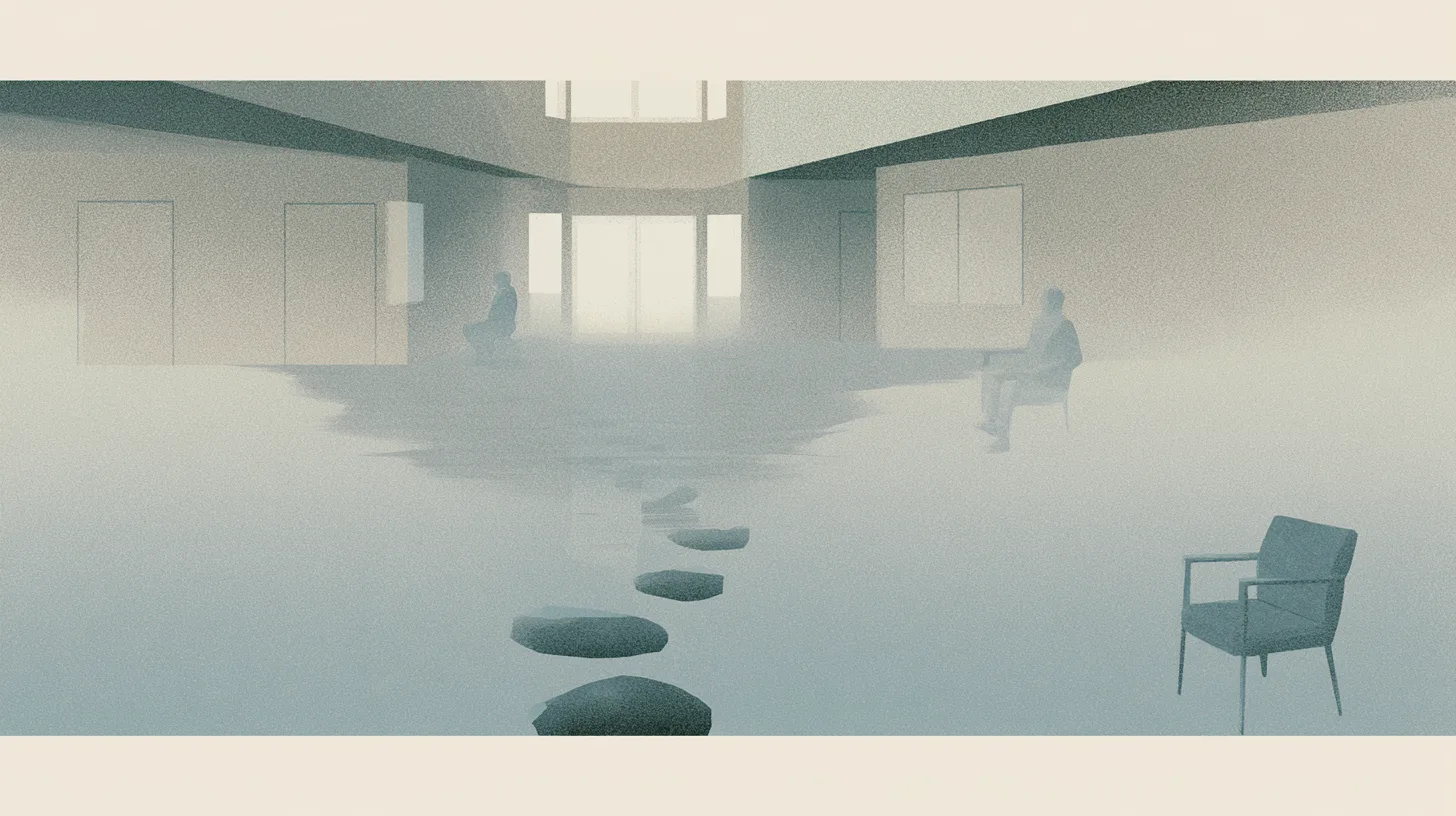
Community / Family / House names the way this treatment environment functions as more than a collection of individuals working on themselves in the same building. The manual treats these words as interchangeable because recovery here is not only an individual process happening near other people. The people around me are part of the treatment environment, and I am part of theirs. I am not just living alongside them; I am living inside a shared structure that we are all constantly shaping.
My behavior is never entirely private. My tone enters the house. My effort enters the house. My resentment enters the house. My honesty, reliability, service, avoidance, humor, arrogance, patience, and care all become part of the environment other people are trying to recover inside. That is a serious responsibility. Even when I tell myself “this is just my mood” or “this only affects me,” it is already in the air other people are breathing. The way I walk into a room, the way I respond to feedback, the way I follow or ignore structure—these all teach other people something about what is normal and what is tolerated here.
It is easy for me to relate to the house as something that exists to take care of me. If I think of the house only as something that provides for me, I become a consumer of community. I ask what support, privileges, recognition, or understanding I am receiving without examining what kind of atmosphere I am contributing. I start keeping score: what did I get, what did they fail to give me, how did the house disappoint me today. When I live that way, I quietly excuse myself from responsibility for the emotional climate I help create.
Family is not a service provided to me on demand. Community means mutual responsibility. It means I am not merely entitled to safety; I participate in creating it. I am not merely entitled to honesty; I owe honesty. I am not merely entitled to respect; I practice respect when I am frustrated, tired, corrected, or unseen. The real test is not how I behave when I feel supported and appreciated; the test is how I behave when I feel misunderstood, inconvenienced, or ignored. In those moments, I either reinforce the kind of house I say I want to live in, or I undermine it.
From the inside, the consumer stance feels justified. I can point to real ways the house has failed me, real moments when staff or peers did not show up the way I needed. I can tell myself that my withdrawal, sarcasm, or passive resistance are just honest reactions to what is wrong around me. But Community / Family / House asks a harder question: regardless of how I got here, what am I adding to the air other people have to breathe? My pain may be understandable, but my impact is still real.
Family does not mean everybody always agrees. It means disagreement does not cancel dignity. Confrontation does not cancel belonging. Another person’s mistake does not make them disposable. In this environment, that shows up in how I respond when someone else breaks a rule, has a bad day, or acts out. I can participate in shaming, gossip, and distance, or I can participate in accountability that still recognizes their humanity. The house teaches me that I can hold someone to a standard without needing to exile them in my mind.
There is a quieter danger in how I use the language of “family” to protect myself from responsibility. I can say “we’re like a family here” and mean “I am entitled to special treatment, endless understanding, and no consequences.” Community / Family / House does not mean that. It means I am willing to be seen, corrected, and held to structure because I understand that my choices affect more than my own storyline. It means I do not get to disappear into my room emotionally while still expecting everyone else to keep the house running around me.
The house is where I learn that love is not constant comfort. Sometimes love is structure. Sometimes it is a boundary. Sometimes it is somebody doing their assignment when nobody thanks them. Sometimes it is refusing to let another person quietly disappear. Love can look like a staff member enforcing a rule I do not like, or a peer calling out my avoidance when I would rather be left alone. It can also look like showing up on time, cleaning up after myself, or following through on a commitment even when nobody is watching. These small, unglamorous behaviors are part of how the house cares for itself.
From the outside, those behaviors can seem minor. From the inside of a treatment environment, they are constant signals about what is safe, what is expected, and what is possible. When I cut corners, roll my eyes, or treat structure as optional, I am not just expressing my personality; I am loosening the frame other people are trying to lean on. When I take responsibility, follow through, and tell the truth even when it costs me, I help make the house a place where other people can risk doing the same.
The house becomes family not because we all feel close every day, but because we repeatedly accept responsibility for what our lives create in one another. I learn that my recovery is not sealed off from theirs; my progress, my regressions, my attitude, and my choices all have a ripple effect. Community / Family / House is the name for that shared field of consequence and care, where we are practicing how to live with other people in a way that is honest, accountable, and sustainable beyond this building.
For me, the operational question is simple: how will I enter the house today? I can walk in as a consumer, scanning for what I am getting or not getting. Or I can walk in as a participant, aware that my presence is part of the treatment itself. That does not mean pretending I am fine or hiding my struggle. It means telling the truth without making the whole house carry the weight of my unexamined reactions. It means noticing when my tone, avoidance, or entitlement are making the air heavier, and choosing to adjust instead of insisting that everyone else adapt to me.
Community / Family / House is not an abstract ideal. It is the way I answer concrete questions: Do I show up when I say I will? Do I clean up what I spill—emotionally and literally? Do I speak about people in ways I would be willing to repeat in front of them? Do I let structure support me instead of fighting it on principle? Each of those choices either strengthens or weakens the place where someone else is trying to survive.
The term reminds me that recovery is not measured only by what I stop doing in private. It is also measured by what it feels like for other people to share a life with me.