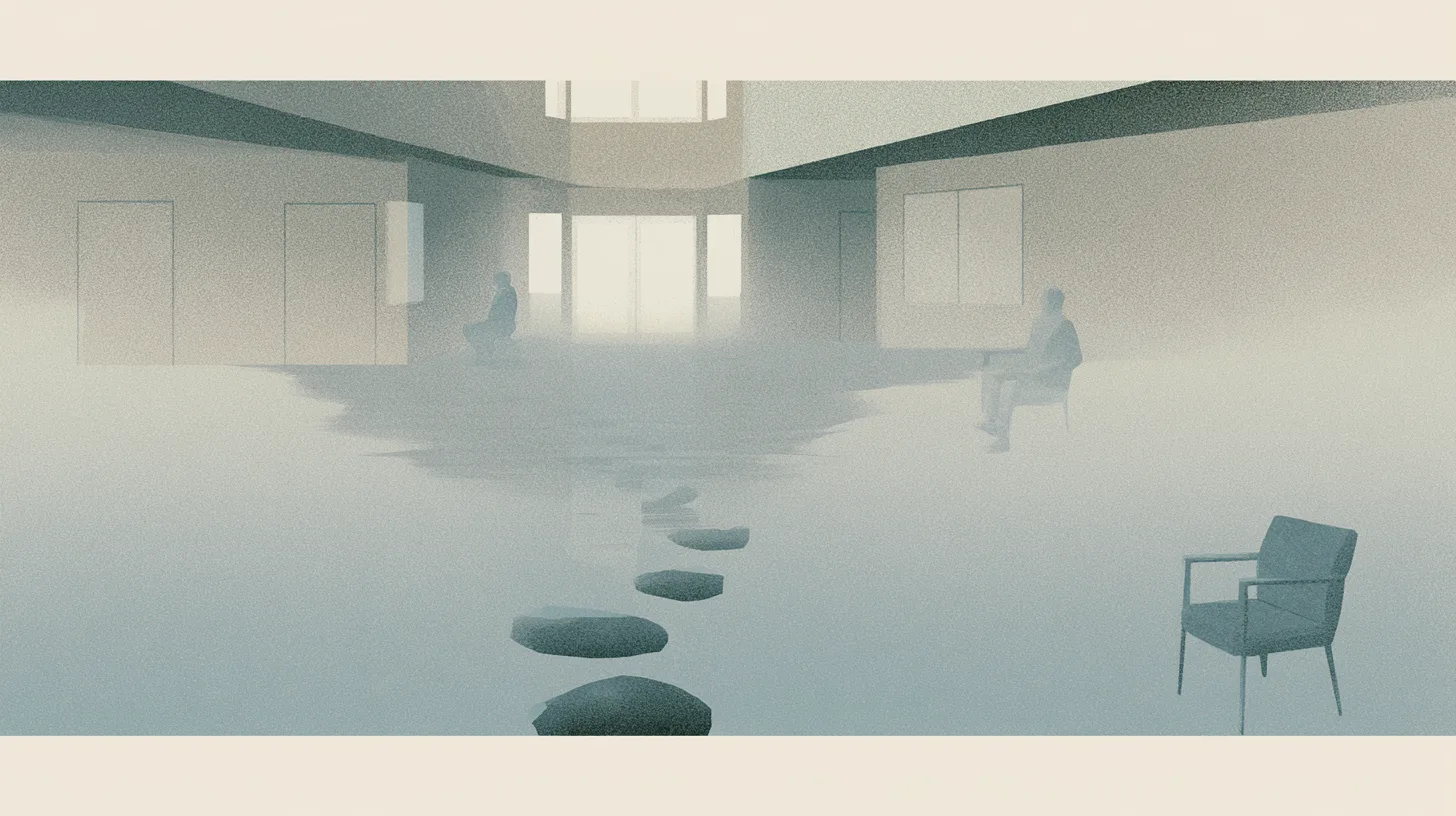
Leaving Against Clinical Advice (LACA) #5
Leaving against clinical advice is a drift from protective structure toward old grooves, where reactive escape masquerades as freedom and endangers fragile change.
Leaving against clinical advice (LACA) is not just leaving a place. It is stepping away from protective structure before the reasons I needed that structure have been fully treated. It is ending contact with a container that was holding me while I was still unstable, even if I can’t fully see that instability in the moment.
That is why it is serious. LACA often presents itself as freedom. It can sound like, “I am ready,” “I am tired,” “I am misunderstood,” “I can handle it,” or “I need to do things my way.” Those sentences can feel honest when I say them. They can sound like clarity, like self-knowledge, like finally listening to myself. But underneath, it can also be discomfort, pride, craving, impatience, resentment, or fear trying to make escape sound reasonable. The same voice that once told me, “You don’t really have a problem,” can now say, “You’ve done enough, you’re fine, you can leave.” LACA is dangerous partly because it can borrow the language of autonomy while being driven by the part of me that wants to avoid pain, limits, and accountability.
It can happen subtly before the person physically leaves. LACA is not only the moment I sign a form or walk out the door. It can begin as a quiet internal drift away from structure. First, I stop listening. I hear the words, but I start filtering them, deciding what applies to me and what doesn’t. Then I stop trusting. I begin to question motives, doubt competence, or assume people don’t really understand me. Then I stop participating. I show up less fully, I do the minimum, I hold back what is actually going on. Then I start building a case against the structure. I collect examples of what is wrong with the place, the people, the rules, or the schedule, and I use those examples to justify why leaving would be reasonable. By the time I walk out, part of me may have already left emotionally. The physical exit is just the last step in a process that has been unfolding inside me for a while.
The danger is that LACA does not happen into empty space. I leave toward something: toward old people, places, things, habits, freedoms, pressures, and illusions. I don’t just step into a neutral vacuum; I step back into an environment that already has grooves worn into it by my past behavior. Old contacts, familiar neighborhoods, unstructured time, and unexamined patterns are usually still there, waiting. The question is not only what am I leaving? It is what am I returning to? If I don’t ask that second question honestly, I can tell myself I am “moving forward” when I am actually circling back into the same conditions that almost killed me.
For me, LACA is dangerous because the part of me that wants to leave is not always the part of me that knows how to stay alive. The impulse to bolt can come from the same survival system that once thought using, isolating, or running away was the safest option. That part of me is good at short-term relief and terrible at long-term consequence. It knows how to get out of discomfort quickly, but it does not know how to build a life that is actually sustainable. When that part is in charge, structure feels like a threat instead of protection, and leaving can feel like self-respect instead of self-endangerment.
In that sense, leaving against clinical advice (LACA) is not just a medical or administrative term. It is a pattern where I side with the most reactive part of myself against the part that is trying to heal. It is a moment where my impatience with the pace of recovery, my frustration with limits, or my fear of being seen fully can outweigh my awareness of how fragile I still am. The paperwork might describe it as a discharge status, but internally it is a decision about which voice I am going to trust: the one that wants out now, or the one that knows I am not done yet.
Today, I am trying to remember that freedom without readiness can become exposure, and that staying in structure can be the mature decision the old version of me would never have made. Freedom is not just the ability to walk away; it is the capacity to survive what I walk into. If I have not yet built that capacity, then what feels like freedom is really just stepping out of shelter into weather I am not dressed for. Staying in structure, when every restless part of me wants to go, can be a new kind of choice: choosing long-term safety over short-term comfort, choosing to let other people help hold what I still cannot hold on my own.