Personalizing #4
Personalizing turns neutral or helpful events into proof that something is wrong with me, unless I pause, question my shame-driven story, and rejoin what is actually happening.
Personalizing means taking something that may be feedback, reality, structure, correction, another person’s mood, or a normal life event, and turning it into a verdict on me. It is when I make the whole room, the whole comment, the whole moment orbit around my wound. Instead of seeing what is actually happening, I quietly rewrite the scene so that I am at the center of it, usually in the worst possible way.
When I personalize, I stop listening. I start translating. I am no longer hearing the words that are being said or seeing the situation as it is. I am running everything through an old filter. Feedback becomes rejection. Structure becomes control. A boundary becomes abandonment. Someone else’s silence becomes evidence. A correction becomes humiliation. A neutral situation becomes proof that I am being attacked, judged, or dismissed. The same external event that might be neutral or even helpful to someone else gets turned into another chapter in the story that there is something wrong with me.
Inside that state, I am not really in the present anymore. I am in contact with my history more than with the person in front of me. I react to them as if they are the sum of every person who has ever hurt me, shamed me, or ignored me. I answer a simple request like it is an accusation. I hear a limit like it is a threat. I feel a delay like it is a deliberate punishment. The actual details of the moment start to matter less than the story I am telling myself about what it must mean.
The danger is that personalizing feels very convincing from the inside. My body reacts. My shame gets loud. My history starts speaking. My heart rate might go up, my stomach might tighten, my face might get hot. Those physical reactions make the story feel even more real. Then I treat the intensity of the feeling as proof that the interpretation is true. “If it hurts this much, it must be because they are doing something to me.” I forget that pain can come from old wounds being touched, not just from new harm being done.
In that place, I start to confuse familiarity with accuracy. Because the story “I am being rejected” is so familiar, it feels true before I even check it. Because my shame has been with me for so long, it sounds like authority when it speaks. Personalizing lets my oldest fears act like they are the most reliable narrators of what is happening right now. I stop asking, “What is actually being said?” and jump straight to, “What does this say about me?”
But feelings are not always facts. Sometimes a comment is just a comment. Sometimes a boundary is just a boundary. Sometimes correction is just correction. Sometimes the room is not against me — my old wound is standing between me and the room. That distinction matters. If I cannot tell the difference between a real attack and my own history flaring up, I will live as if I am under constant threat, even in rooms that are actually safe or neutral.
For me, personalizing is dangerous because it turns growth into injury. It makes me defend myself from the very thing that could help me. If I hear every piece of feedback as an attack on my worth, I will fight the feedback instead of considering whether there is something in it I can use. If I experience every boundary as abandonment, I will resist the structures that could actually make relationships safer and clearer. Personalizing makes me miss the lesson because I am too busy protecting my image. I become more invested in not feeling exposed than in becoming more honest, more accountable, or more aligned.
Over time, that pattern can quietly shape my whole day. If I am not careful, I can turn a new day into the same old courtroom, where every person is a witness against me and every moment becomes evidence for my fear. A look becomes “proof” that someone is disappointed in me. A delay becomes “proof” that I do not matter. A simple “no” becomes “proof” that I am unlovable. The verdict is already written before the day even starts, and I spend my energy collecting data to support it instead of looking for what is actually true.
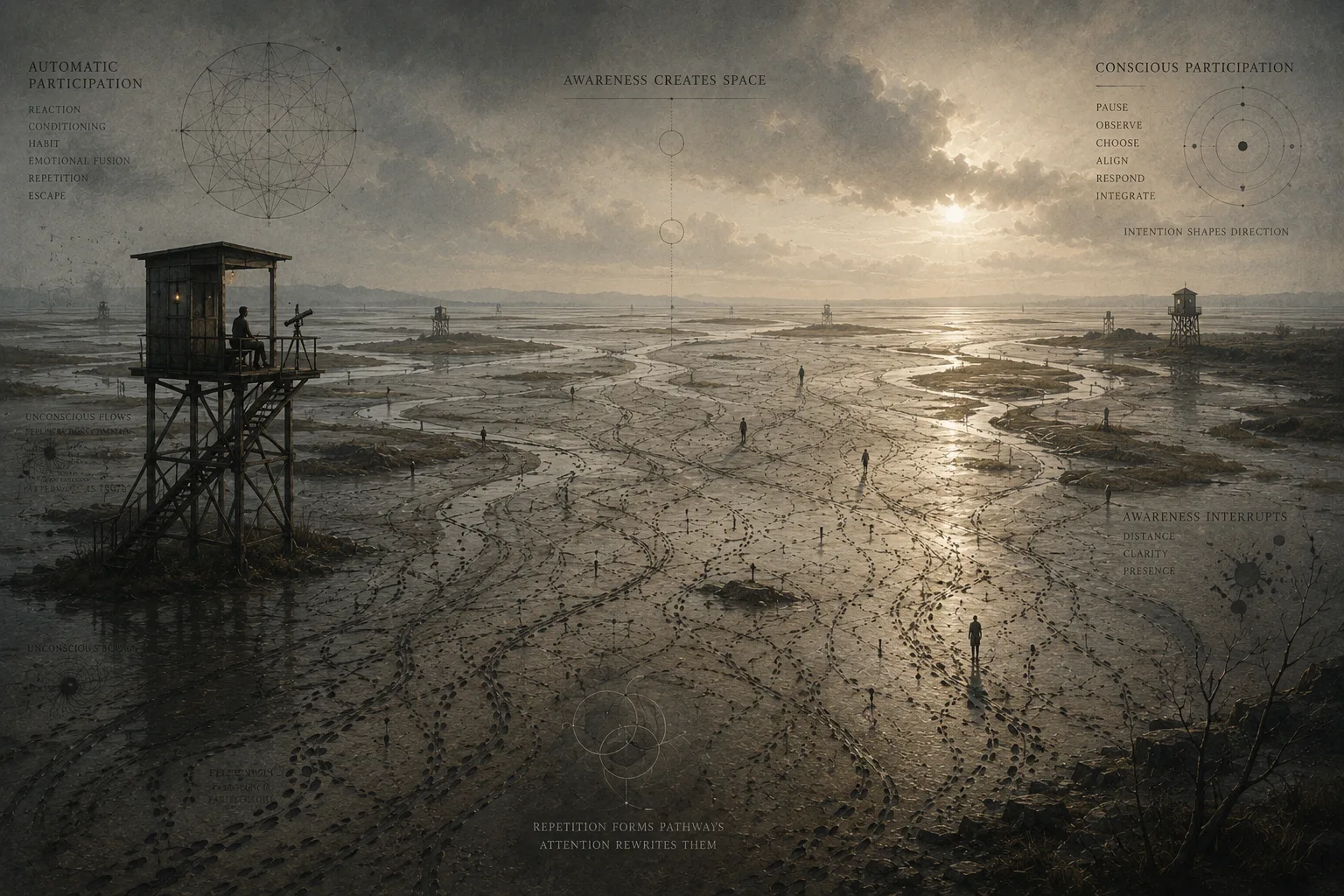
Recovery asks me to do something different. It asks me to pause and ask: “Is this actually about me, or is my wound trying to make it about me?” That question does not magically erase the feeling, but it creates a small gap between the feeling and the story I am building around it. In that gap, I can consider other possibilities: maybe the person is tired, maybe the boundary is healthy, maybe the correction is meant to help, maybe the silence is not a message at all.
That pause can save the day. It can keep me from sending the angry text, withdrawing into shame, or building a whole case in my head against someone who is not actually attacking me. It gives me a chance to respond instead of just react. Personalizing will probably always be a temptation for me, especially when my shame is loud or my history is close to the surface. But learning to notice it, name it, and question it is part of how I keep my wound from running the room, the comment, and the moment.